Biblioteca RCUSpace · 8–12 años
¿Qué es el universo?
Un viaje para descubrir el enorme hogar de las estrellas, los planetas y las galaxias.
Probar actividadComencemos
¿Alguna vez miraste el cielo y pensaste: “¿dónde termina todo esto?”
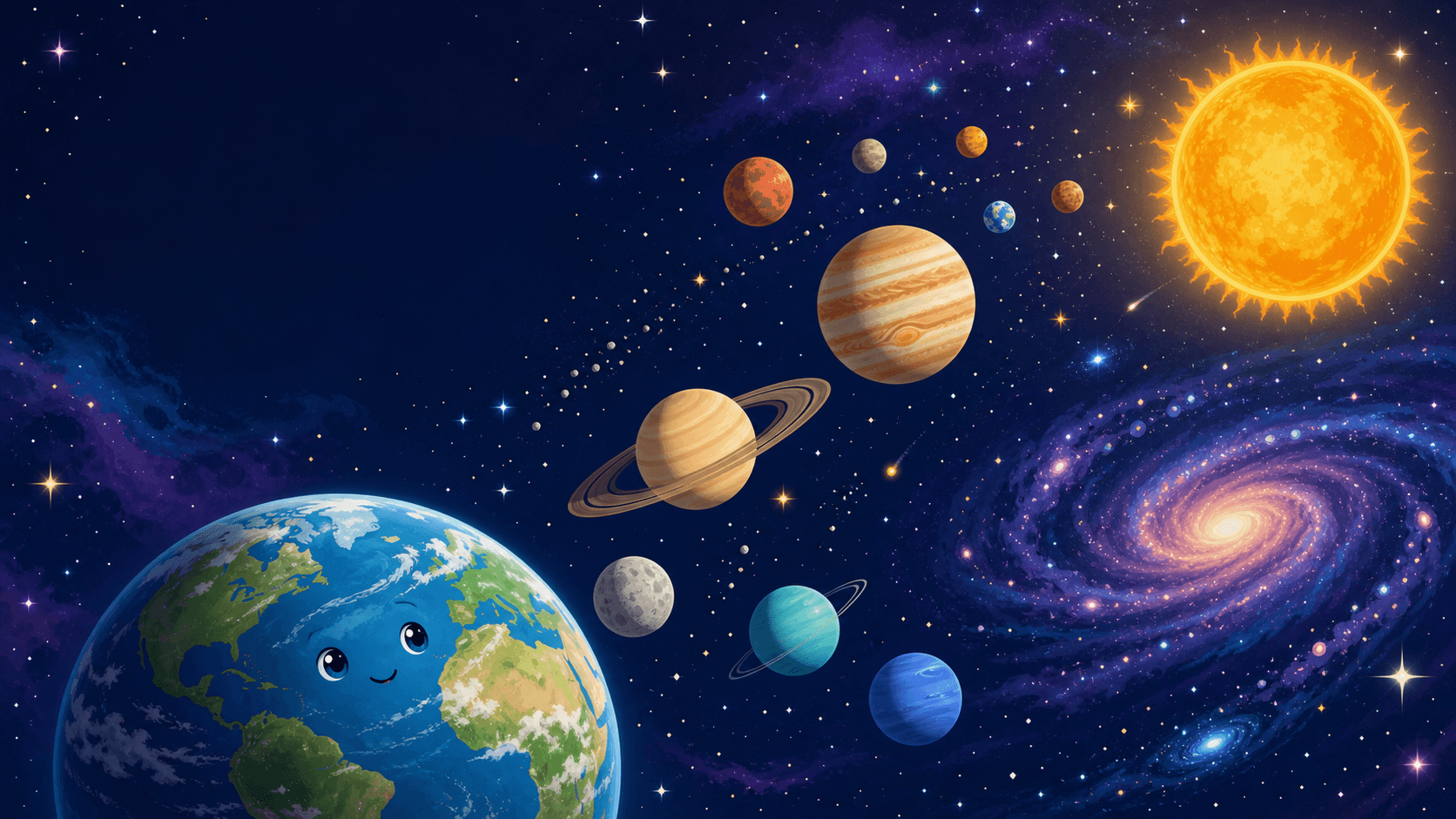
Es una pregunta gigante. Arriba de nosotros hay una gran aventura: el universo. Es todo lo que existe: el espacio, el tiempo, la materia y la energía. Sí, eso incluye las estrellas, los planetas, las nubes de gas, la Tierra y también a ti.
Un hogar increíblemente grande
Imagina que tu habitación es el planeta Tierra. Tu casa sería el sistema solar: el vecindario donde viven el Sol y los planetas que dan vueltas a su alrededor. Después, tu ciudad sería una galaxia. Una galaxia es una familia enorme de estrellas, planetas, gas y polvo que se mantiene junta gracias a la gravedad. La gravedad es la fuerza que atrae los objetos entre sí.
Nuestra galaxia se llama Vía Láctea. En ella vive el Sol, nuestra estrella. El Sol parece grande porque estamos cerca de él. Las estrellas que vemos de noche también son soles, pero están tan lejos que solo se ven como puntitos brillantes.
Y la Vía Láctea no está sola. Hay muchas otras galaxias. Algunas tienen forma de espiral, como un remolino; otras parecen una pelota suave o una mancha de luz. Entre una galaxia y otra hay distancias tan grandes que una nave espacial tardaría muchísimo más que una vida humana en cruzarlas.
Conceptos esenciales
Las piezas de este rompecabezas cósmico
Estrellas
Son enormes bolas de gas muy caliente que producen luz. El Sol es nuestra estrella.
Planetas
No fabrican su propia luz. Viajan alrededor de una estrella, como la Tierra alrededor del Sol.
Galaxias
Son conjuntos gigantescos de estrellas y otros materiales del espacio.
Ejemplos que puedes imaginar
Piensa en una playa. Cada granito de arena podría ser una estrella. Ahora imagina no una playa, sino muchas playas completas: así de abundantes pueden ser las estrellas de una galaxia. Pero recuerda: el universo no es una caja llena. Casi todo es espacio vacío.
También puedes pensar en la luz como una mensajera veloz. La luz del Sol tarda unos ocho minutos en llegar hasta nosotros. Cuando miras una estrella muy lejana, ves su luz después de un viaje largo. Mirar el cielo es como mirar mensajes enviados desde el pasado.
¿Sabías que?
Cuatro pequeñas sorpresas del cosmos
La luz del Sol tarda cerca de 8 minutos en llegar a la Tierra.
Una cucharadita de material de una estrella de neutrones pesaría muchísimo, pero esos objetos están lejísimos y son muy extraños.
La Vía Láctea, nuestra galaxia, tiene cientos de miles de millones de estrellas.
Las estrellas que vemos de noche pueden estar tan lejos que su luz viajó durante años antes de entrar a tus ojos.
Glosario
Palabras para tu mochila espacial
- Universo
- Todo lo que existe: espacio, tiempo, materia y energía.
- Galaxia
- Grupo enorme de estrellas, gas y polvo unido por gravedad.
- Gravedad
- Fuerza que atrae los objetos unos hacia otros.
- Órbita
- Camino que sigue un objeto al dar vueltas alrededor de otro.
- Luz
- Energía que viaja y nos permite ver.
Lo que aprendimos
El universo es nuestro gran hogar
- Incluye todo lo que existe, desde una mota de polvo hasta una galaxia.
- La Tierra vive en el sistema solar, dentro de la Vía Láctea.
- Las estrellas, planetas y galaxias están separados por enormes distancias.
- La curiosidad nos ayuda a seguir descubriendo este lugar asombroso.
Quiz · Fácil
Reto: exploradores del universo
Elige una respuesta en cada pregunta. Recibirás una pista al instante y terminarás en menos de cinco minutos.
0 de 5
Tu viaje apenas comienza
Cada pregunta abre otra puerta. Sigue explorando el espacio, las misiones y las historias de ciencia en RCUSpace.